



Watching less talented people thrive while you fall behind can be discouraging. Most likely, lack of action is the main barrier that prevents your skills from shining and giving you results. It’s time to take action and change your mindset to solve PROCRASTINATION once and for all.
Imagine someone who spent a few dozen years failing in all areas and now has the mental key to eliminate, among other things, procrastination. This is the story of someone who overcame adversity and made rapid progress because of his deliberately created mindset. Come on, make a tailor-made suit but in the mindset.
Don’t let fear of failure or comparison to others hold you back. With the right attitude and creating the right mindset, you remove any obstacles and achieve the success you deserve. It’s time to take action and make your abilities shine!
Achieve Your Goals: Stop Procrastinating and Get Focused
have you ever wondered why your efforts sometimes don’t seem to pay off? The answer lies in your own mind. If you are constantly doubting and worrying about whether your actions will pay off, you are unknowingly sabotaging yourself.
Imagine this: you have obstacles in front of you, everything seems to indicate that you will fail. However, there is something more powerful that can make you succeed: your orderly, goal-oriented mind. If you can focus it on a goal with determination, you can make things happen, make your dreams come true. And you can do it deliberately.
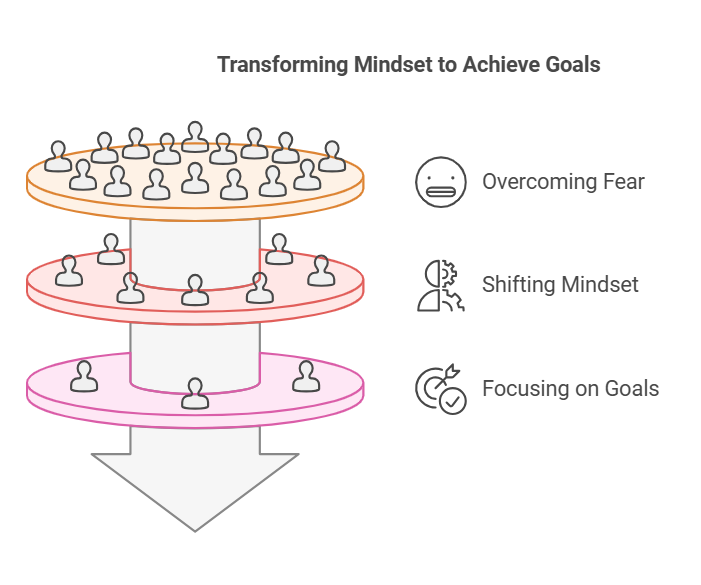
The Price of Procrastination
Procrastination can be tempting, but remember that every day you procrastinate, you are giving up the life you could have had. The life you deserve to live, the life that is waiting for you. Every time you don’t listen to your conscience, you are straying from the path that will lead you to success.
- Key tip: Create a conscience according to your goal, it will guide you in the right direction.
- Avoid the easy stuff: The easy stuff is not what will get you to the desired result, and changing a mindset is easy, it is the process of that change that is not.
have you found yourself working on something that doesn’t get you closer to your goals? It’s time to stop and rethink your approach. Remember, the key is to direct your mind towards what you really want, focus on what gets you closer to your dreams and don’t get sidetracked.
you can do it by changing your mindset!
Challenge Your Mindset to Achieve Success
In the pursuit of success, we often face challenges that can lead us to question our actions and thoughts. It may seem crazy to pursue ambitious goals, but what really is crazy?
The real insanity lies in settling for a limited and dull mindset, which prevents you from growing and reaching your full potential. Forget about what other people will say, focus on changing your mindset first and the rest will come on its own.
Overcoming Stupidity and Limitation
It is common to hear people say “I wouldn’t do that,” without even considering the possibility. This attitude reflects a closed mindset, unable to see beyond their own limitations. Instead of saying “I wouldn’t do that,” why not consider how you could achieve it? Why listen to a person who tells you they wouldn’t do that when they are in a situation of poverty or failure?
- Personal Transparency: Fear of failure prevents you from being transparent with yourself. You make excuses for not achieving so that you feel better. You avoid facing your real weaknesses and desires, which keeps you off the road to success.
- Recognize your Desires: Look at your deepest aspirations and recognize that you deserve to achieve what you really want. Don’t limit yourself to what you think is possible, dare to dream big, and don’t let anyone tell you that you can’t.
- Change your Mindset: Let go of the idea that certain goals are unattainable. You may have failed several times… yes… so what? Focus on visualizing success and work with determination to achieve it, letting go of your own limiting beliefs and looking for formulas to solve them instead of looking for complaints to justify yourself.
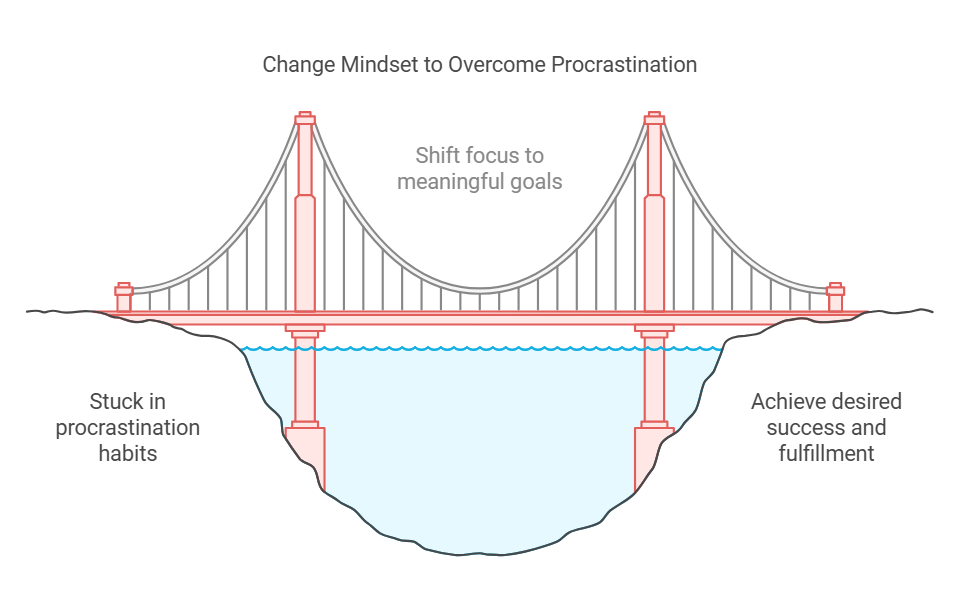
Don’t let stupidity and conformity keep you from your dreams. Break away from the limited mindset and dare to challenge your own limits. Success is within the reach of those who dare to believe in themselves and work permanently until they achieve it.
Procrastination is NOT A Disease, Procrastination Is A Habit
It is impossible for anyone to wake up in the morning and decide, “Today I want to be fatter, more broke, undisciplined and more mentally negative.” That’s not anyone’s daily goal.
Yet you behave as if you don’t care about getting better, which is just irrational. You keep doing the same things from the same mindset in which you failed yesterday and procrastinated. This way it is impossible to make progress on your goal. Procrastination is NOT a disease, Procrastination is an acquired habit that has been established in your daily life and you have to eliminate it. So the first step is to really know that your first goal is to change your mind. You must be the one who controls the mind, not the mind controls you.
The Importance of the Deliberately Created Mindset
It is essential to be clear about your goals and work with your mind to achieve them. Building a results-oriented mindset that does not sabotage you is key to success. Attitude and discipline play a key role in your path to progress and personal development. Many people try to achieve their goals without changing their mindset. They start doing things and 4 days later their mind has sabotaged them, most commonly with procrastination. To change your path, you have to change your mind. And the road will open up for you only once you have done it. If you don’t, you will continue to lead your life in circles of continuous failure and still wonder why.
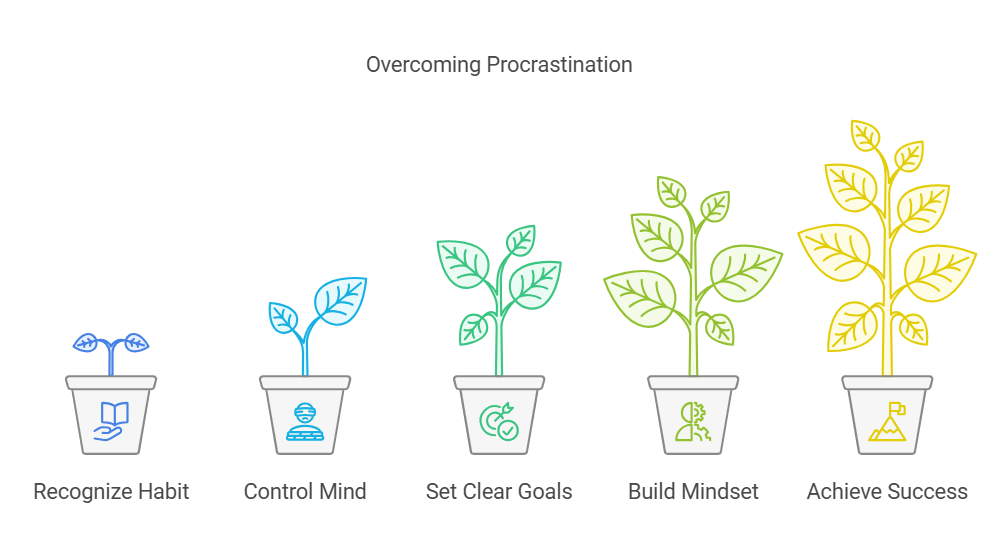
Prove with Facts That Procrastination Is Not in Your Life
It is vital to demonstrate with facts that following advice and working on the basis of that advice pays off. Every action we take should take us one step closer to our goals. It is not enough to desire a change, we must act consistently and constantly to achieve it.
Remember, every step you take forward, no matter how small, brings you closer to your goals. Don’t settle for mediocrity, always seek to improve and grow in all aspects of your life.
And the first step is to change your mentality. The moment you start doing mental techniques that change the “circuits” of your brain, your results will change.
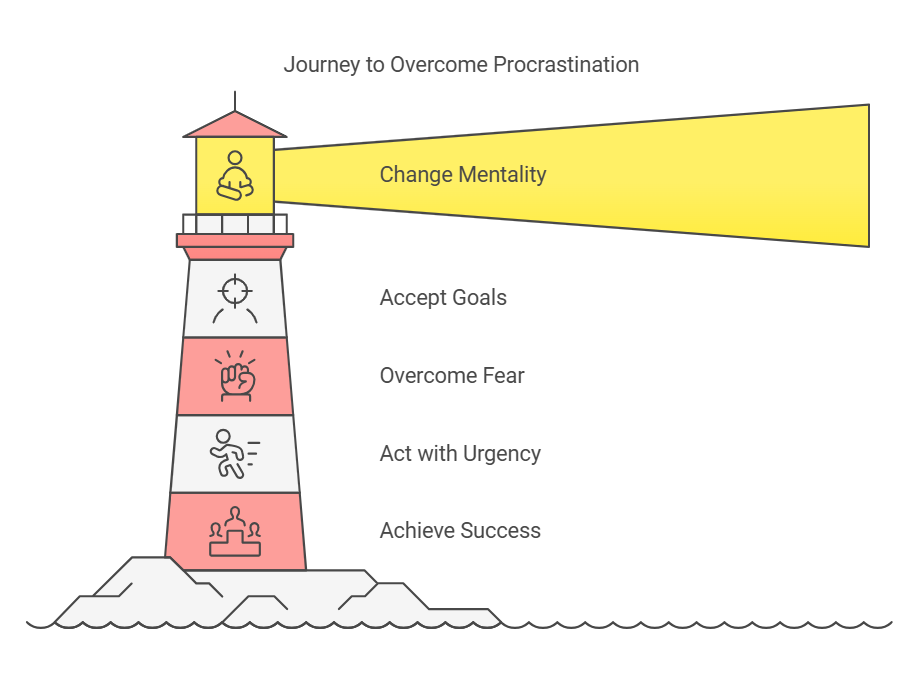
Accept your goals openly and work hard to achieve them. Don’t let fear paralyze you, stand up and fight for your dreams!
When will you realize the importance of urgency and dedication?
In life, it is critical to understand that simply being interested in something is not enough. To achieve success, you must be obsessed with your goals and act with massive urgency. Otherwise, you run the risk of being overtaken by those who do.
There are people willing to work with an urgency and dedication that you may lack. It is crucial to understand that procrastination and inaction can open the door for others to take your place.
Therefore, instead of procrastinating on your tasks and goals, it is important to act with determination and perseverance. Avoid giving advice on topics you don’t know about and focus on your own actions to achieve success.
The PROCRASTINATION Solution: Mental Techniques To Eliminate Procrastination
Eliminate the habit of procrastinating with these simple techniques for procrastination. I detail 6 mental techniques and exercises to tackle procrastination, focusing on the power of thought and belief reprogramming.
1. Emmet Fox: The Substitute Thinking Technique
- Description: Emmet Fox suggests that the mind cannot hold two thoughts simultaneously. Therefore, if you want to eliminate procrastination, replace any procrastination thought with one that involves action.
- Exercise: Whenever you are tempted to procrastinate, visualize the success and well-being you will gain from completing the task. Use positive affirmations such as “I act now” or “I commit to action right now”.
- Basis: This approach is based on the idea that targeted positive thinking reprograms the subconscious mind to align with goals.
2. William Walker Atkinson: The Power of Creative Visualization
- Description: Atkinson emphasizes the importance of visualizing the desired outcome to generate momentum toward action. Procrastination occurs when the mind cannot clearly visualize the end goal.
- Exercise: Before beginning a task, close your eyes and vividly imagine that you have already completed it. Feel the satisfaction, relief and accomplishment of having finished it. This exercise helps create a deep desire for action and drives away procrastination.
- Basis: This approach is rooted in creative thinking, where the mind tends to seek what it most desires and, by visualizing clearly, procrastination diminishes.
3. Ernest Holmes: The Self-Affirmation Technique
- Description: According to Holmes, the power of affirmation is key to changing limiting beliefs that cause procrastination.
- Exercise: Create daily affirmations that reaffirm your commitment to action. Examples: “I am efficient and productive”, “My mind is focused on results”. Repeat these affirmations several times a day, especially when you feel procrastination creeping in.
- Basis: Holmes argues that repeated use of positive affirmations rewires the brain, eliminating limiting beliefs and negative habits such as procrastination.
4. Joseph Murphy: Subconscious Reprogramming During Sleep
- Description: Murphy argues that the subconscious is most receptive at night. Procrastination is linked to deep-seated limiting beliefs that can be reprogrammed while you sleep.
- Exercise: Before going to sleep, repeat a specific affirmation such as “Tomorrow I will wake up energized and complete all my tasks.” Clearly visualize what your day will look like without procrastination. This technique trains the subconscious mind to associate rest with productivity.
- Basis: The subconscious mind influences automatic decisions. By scheduling it before going to sleep, you can reduce the tendency to procrastinate the next day.
5. Charles F. Haanel: The Mind Control Method
- Description: Haanel emphasizes the importance of mental control to eliminate negative patterns, such as procrastination.
- Exercise: Use the 15-minute meditation technique of total silence, where you focus your mind on a single idea: “Action is the only way to success”. This practice trains your mind to concentrate and acts as a way to eliminate distractions.
- Basis: Mind control, according to Haanel, allows people to make decisions based on their conscious will and not on automatic impulses or procrastination.
6. Breakdown of Tasks into Microscopic Steps Technique (Associated with New Thought Metaphysics)
- Description: Some New Thought authors suggest that procrastination is the result of feeling overwhelmed. The trick is to break down tasks into small, manageable steps.
- Exercise: Break the task into such small steps that procrastinating seems absurd. For example, if you need to write a report, start with an action as small as opening the document. After completing each mini-step, celebrate the progress.
- Basis: This is based on the principle of“mental momentum,” where completing small tasks creates a flow of action that decreases procrastination.
These techniques are focused on modifying thought patterns, reprogramming the subconscious and using the power of the mind to generate action. They are profound exercises that go beyond superficial advice, aiming to transform the mental habits that cause procrastination.
More Advanced and Effective Mental Techniques for Tackling Procrastination
These go beyond simple visualization and affirmation, and focus on changing deeply ingrained mental patterns and transforming the relationship to action. Here’s a more elaborate approach:
1. “Mental Transmutation” Technique – William Walker Atkinson
- Description: Atkinson, in his work on the Law of Mentalism, introduces the idea of “Mental Transmutation”, where you can transform negative or inertial thoughts into positive and dynamic thoughts.
- Exercise: When you find yourself procrastinating, identify the specific thought that is blocking you (e.g., fear of failure or discomfort with the task). Once identified, use the mental transmutation technique to change the associated emotional and mental state. This is accomplished by focusing intensely on the opposite thought. If the thought is “This is too difficult,” transfer your attention to “I am able to do it with ease.” The key is to use willpower to modify the emotional state that prevents you from taking action.
- Basis: This technique delves into the power of the mind to alter its vibrational state, transforming patterns of procrastination into momentum toward action.
2. Temporary Bridge” Technique – Neville Goddard
- Description: Goddard, in his more spiritual approach to New Thought, proposes that to overcome procrastination, you must mentally create a “bridge” to the future in which you have already completed the task.
- Exercise: Imagine a specific point in the future where you have already completed what you are procrastinating on. Then, in your mind, visualize a series of small “bridges” or key moments that take you from your current situation to that future. As you build these “bridges,” mentally experience them as if they are already happening. This process deepens the connection between your current state and the desired future, reducing internal resistance.
- Basis: It is based on the principle that time is flexible in the mind and that, by mentalizing the completion of a task, you can break the cycle of procrastination by activating the future from the present.
3. Observer” Technique – Florence Scovel Shinn
- Description: Scovel Shinn, known for her focus on the power of language and thought, developed the “Observer” technique, where you train yourself to observe yourself as a third party when you are procrastinating.
- Exercise: When you catch yourself procrastinating, stop and change your perspective to observe your behavior as if you were someone else. This dissociation exercise allows you to view procrastination objectively and unemotionally. By observing yourself from the outside, you may notice subconscious patterns or excuses you make to avoid action. Once identified, interrupt the cycle with a direct command to your mind, as if you were a coach observing an athlete: “Act now.”
- Basis: This dissociative technique is powerful because it breaks the emotional identification with procrastination, allowing for more objective and rational action.
4. Ego Disidentification” Technique – Joel S. Goldsmith
- Description: Goldsmith emphasizes the need to free the mind from identification with the “small self” or ego, which is often the source of procrastination. According to his approach, procrastination arises from the ego, which is attached to comfort and avoids discomfort.
- Exercise: Every time you feel the temptation to procrastinate, bring your awareness to the present and ask yourself, “Who is it that is feeling this resistance?” Then, remind yourself that you are not your ego, but a higher consciousness. By disidentifying from that “small self” that fears discomfort or failure, you can overcome the cycle of procrastination. This exercise requires a regular practice of mindful meditation and inner reflection.
- Basis: Goldsmith introduces a deepening of the concept of nonduality, where the mind ceases to identify with emotional blocks and assumes a higher perspective, promoting action without internal resistance.
5. Identity Shift” Technique – Maxwell Maltz (Psycho-Cybernetics)
- Description: Although Maltz does not belong directly to New Thought, his work in psycho-cybernetics has a strong connection to metaphysics. Maltz argues that procrastination is related to self-image; changing self-image changes behavior.
- Exercise: Develop a new mental identity of someone who does not procrastinate. Instead of simply focusing on changing the behavior, focus on changing the belief of who you are. Use a combination of self-affirmations and daily visualization in which you see yourself as a disciplined and committed person. Continued repetition of this new self-image trains your mind to eliminate procrastination.
- Basis: Psycho-cybernetics is based on the idea that the human brain is like a machine that follows a “map” (the self-image). Changing the self-image changes automatic behaviors.
6. Technique of “Tension Control and Relaxation” – James Allen
- Description: Allen, in his work “As a Man Thinks”, suggests that procrastination is generated by mental tension caused by fear or indecision. To overcome it, it is necessary to learn to control the tension and relax at key moments.
- Exercise: Practice the tension and relaxation technique before starting any task. Identify the point at which you feel resistance (tension) when thinking about the task you are avoiding. Intentionally focus on that tension, then use deep breathing to consciously relax it. This process releases the tension’s hold on you and allows you to approach the task from a relaxed state of mind.
- Basis: Allen proposes that the relaxed mind is more efficient and tends to act rather than procrastinate. Controlling internal tension releases the energy to act.
These techniques are deeper and seek to go to the mental and emotional source of procrastination. They involve changes in perspective, ego control and a retraining of the subconscious and conscious mind, moving away from simple visualization and superficial affirmation.
More Focused Techniques for Preparing the Mind to Avoid Procrastination Before It Occurs
Procrastination techniques with a more preventive approach.
1. Mental Rhythm Technique – Charles F. Haanel
- Description: Haanel proposes that the mind works best when it is trained to act in regular “rhythms” or patterns, which reduces procrastination by establishing clear mental habits of action.
- Exercise: Establish a set schedule for certain types of work or activities, creating an unbreakable mental routine. The idea is that you train your mind to associate certain times of the day with action, not allowing the temptation to procrastinate to arise. For example, if every day at 10 am you start your work without fail, the mind will already be conditioned to act without resistance.
- Basis: Haanel believes that the power of constant repetition creates a force in the mind that resists inertia.
2. Mental Input Control” Technique – Uell S. Andersen
- Description: Andersen, in his book “Three Magic Words”, introduces the idea that you can train your mind not to allow procrastinating thoughts to enter your field of consciousness.
- Exercise: Before you start your day, perform a mind control exercise: Sit quietly for 5 minutes and observe the thoughts that flow through your mind. Every time you detect a thought that pushes you to procrastinate, imagine closing the door on it. Over time, this preventive exercise strengthens the mind so that it does not accept distractions and excuses before they occur.
- Basis: Andersen proposes that thoughts are like visitors entering your mind, but you decide which ones you allow and which ones you do not. Controlling them beforehand prevents them from taking root and causing procrastination.
3. Environmental Conditioning” Technique – Wallace D. Wattles
- Description: Wattles teaches that the physical environment affects the mind significantly. By controlling your environment, you can prevent procrastination before it occurs.
- Exercise: Arrange your workspace in a way that prompts you to take action. Place visual elements that represent action or progress, and eliminate distractions before you begin any activity. The key is that the physical environment should reflect order, clarity, and direction, which preemptively influences your mindset.
- Basis: According to Wattles, the environment has a direct influence on the flow of thought. An environment that inspires action prevents procrastination.
4. Written Self-Commitment” Technique – Genevieve Behrend
- Description: Behrend, a disciple of Thomas Troward, teaches that written self-commitment has profound power in the subconscious and conscious mind.
- Exercise: At the beginning of the day or week, write a specific statement of what you will do and when you will do it. Signing it reinforces the commitment to action. This act is not a simple to-do list, but a kind of “contract” that your mind takes seriously. By doing it before you face any task, your mind is already predisposed to fulfill the commitment, reducing the possibility of procrastination.
- Basis: Behrend argues that the mind tends to follow through on commitments when they are formalized. By writing down your intention, you are activating a psychological process that leads you to fulfill it without resistance.
5. Preventive Breakdown” Technique – James Allen
- Description: Allen, known for his focus on the power of pure thought, suggests that procrastination is the result of feeling overwhelmed before you start. To avoid it, he proposes a preventive breakdown.
- Exercise: Before you start your day, mentally break down each large task into small, doable steps. Do this as part of a daily 10-minute routine when you wake up. This breakdown prevents the mind from perceiving the task as an unapproachable block, which is often the root of procrastination.
- Basis: Allen proposes that by making the mind perceive each task as manageable from the start, you prevent the tendency to procrastinate.
6. Start Anchoring” Technique – Émile Coué
- Description: Coué, creator of the autosuggestion method, introduces the idea that you can associate a mental “anchor” with the start of a task to condition your mind to act automatically when a specific trigger occurs.
- Exercise: Create an “anchor” for when you must begin an important task. For example, every time you place an object in a specific location (such as a pen on your desk), your mind will know it is time to start. Do this exercise systematically for several days. Eventually, the simple act of placing the object will automatically trigger the start of your task, giving no room for procrastination.
- Basis: Coué argues that the subconscious mind responds powerfully to repeated stimuli. By associating a physical act with the start of the task, you create an automatic response.
7. Technique of the “Physical Preview Exercise” – Raymond Holliwell
- Description: Holliwell, in his book Working with the Law, suggests a preview technique based not on the mental, but on the physical.
- Exercise: Before starting your day, do a brief physical activity (walking, stretching, etc.) while mentally repeating to yourself that you are “on the move”. The physical action generates a mental impulse that activates a proactive state. This exercise is done as a daily routine, before facing any important task. The mind is conditioned to act and move whenever it senses that the body is in motion.
- Basis: Physical movement is capable of generating mental momentum. If you prepare your body for action, your mind will be ready to follow the same pattern.
These techniques are designed to prepare your mind and environment before the impulse to procrastinate appears, preventing inertia from becoming an obstacle. They are not visualizations or affirmations, but practical, psychological strategies that help establish a solid foundation for action.